
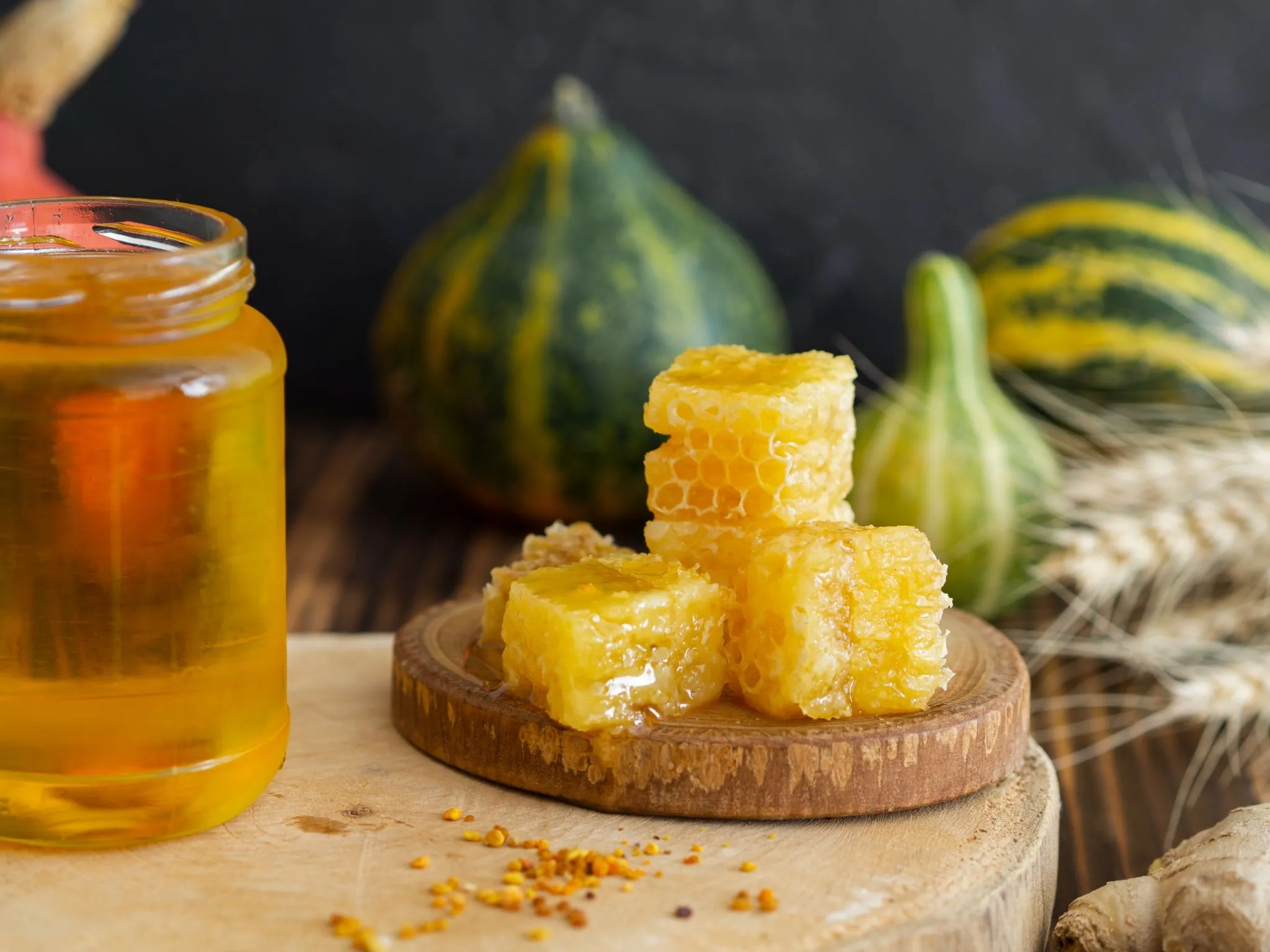
Raw honeycomb is the natural structure of hexagonal wax cells that bees build to store honey, eaten whole with the honey still sealed inside. It is made of edible beeswax filled with raw, unheated honey, along with traces of pollen and propolis from the hive.
Beyond its sweetness, each cell holds small amounts of vitamins, minerals, enzymes, and antioxidants. Raw honey is about 95-99% sugar and water, so these nutrients appear in trace amounts rather than large doses. Even so, they are part of what makes honeycomb a more complete, whole-food sweetener than refined sugar.
What is Raw Honeycomb?
Raw honeycomb is unprocessed honey still held inside its natural beeswax comb. Nothing is heated, filtered, or added, so the comb keeps everything the bees placed in it.
Each piece contains four main elements:
- Raw honey is the sweet liquid stored in the cells.
- Beeswax is the edible substance that the bees build and cap.
- Bee pollen is trapped in small amounts during collection.
- Propolis, a resin bees use to seal and protect the hive.
Because it skips processing, raw honeycomb holds more of its natural compounds than filtered, pasteurized honey.
The Vitamins Inside Every Cell of Raw Honeycomb
Raw honeycomb carries small amounts of several vitamins, drawn mostly from the honey and the pollen sealed within it. These appear in trace quantities, yet they add nutritional value that refined sweeteners lack.
B Vitamins (B6, B12, Riboflavin, and Niacin)
B vitamins support energy production and metabolism, and raw honeycomb contains them in trace amounts. Most come from the bee pollen trapped inside the comb during collection, which is one reason whole comb carries more of them than filtered honey.
This group includes vitamin B6, vitamin B12, riboflavin, and niacin. Each one helps the body turn food into usable energy and supports healthy nerve and digestive function. Riboflavin and niacin assist in breaking down carbohydrates, while B6 plays a part in forming red blood cells.
The levels in honeycomb are small, so it works best as a natural complement to a balanced diet rather than a main source of these vitamins. Eating the comb raw helps preserve the pollen that carries them.
Vitamin C
Vitamin C is a well-known antioxidant that supports the immune system, and small amounts occur naturally in raw honey. Heat and processing reduce this content, which is one reason raw comb retains more of it than commercial honey.
Honeycomb is not a major source of vitamin C on its own. Even so, the trace levels work alongside the flavonoids and phenolic compounds in raw honey, adding to its overall antioxidant value.
Vitamins A, D, and E
Vitamins A, D, and E are fat-soluble vitamins found in trace amounts within honeycomb, linked mainly to the beeswax and pollen. Each one plays a distinct role:
- Vitamin A supports vision and skin health.
- Vitamin D contributes to bone strength and immune function.
- Vitamin E acts as an antioxidant that helps protect cells.
Because these vitamins dissolve in fat, the natural wax in honeycomb helps carry them, which is one more reason whole comb offers a fuller profile than honey alone.
The Minerals Inside Raw Honeycomb
Raw honeycomb supplies a range of trace minerals that refined sugar simply does not contain. The exact amounts vary with the flowers the bees visit and the region where the honey is made.
Calcium and Magnesium
Calcium and magnesium occur in small amounts and support bone strength, muscle function, and the nervous system. The two often work as a pair, since the body relies on both to keep bones and muscles healthy.
Calcium is central to strong bones and teeth, while magnesium contributes to hundreds of processes, including energy production and nerve signaling. Many everyday diets fall short on magnesium, so each natural source adds value.
Potassium
Potassium is one of the more notable minerals in honey, where it helps regulate fluid balance and supports normal heart and muscle function. It also works with sodium to maintain healthy blood pressure and proper hydration.
The amount of potassium varies with the type of honey. Darker honeys generally carry a higher mineral content than lighter ones, since they come from nectar richer in minerals. This is why the flowers a bee visits shape the final nutrient profile of the comb.
The potassium in raw honeycomb is modest, yet it reflects the natural mineral mix the bees gather from flowering plants. That natural variety is something refined sugar cannot offer.
Iron and Zinc
Iron and zinc appear in trace amounts and serve as essential minerals, meaning the body cannot make them and must get them from food. Each one supports a different system.
Iron helps red blood cells carry oxygen, which keeps energy levels steady, while zinc supports immune function, wound healing, and a normal sense of taste and smell. The amounts in honeycomb are small, but they round out the natural package found in unprocessed comb.
The Other Hive Compounds Working Alongside Them
Vitamins and minerals are only part of the story. Raw honeycomb also delivers natural compounds that processed honey often loses:
- Enzymes such as glucose oxidase and invertase, which give raw honey its antimicrobial quality.
- Antioxidants, including flavonoids and phenolic compounds, help protect cells.
- Bee pollen, which adds amino acids and B vitamins in small amounts.
- Propolis is a resin valued for its antibacterial properties.
- Beeswax fatty acids are long-chain compounds that some research links to heart health.
These elements work together, which is why the whole comb is often considered more complete than extracted honey.
How to Enjoy Raw Honeycomb?
You can eat raw honeycomb whole, including both the golden honey and the soft beeswax around it. The comb is fully edible, needs no preparation, and fits into sweet and savory dishes alike.
Here are simple ways to enjoy it:
- Eat a piece straight from the spoon for the purest taste of raw honey and wax.
- Pair it with cheese on a charcuterie board, where it balances sharp and salty flavors.
- Spread it over warm toast, biscuits, or pancakes so the honey melts into every bite.
- Stir it into yogurt or oatmeal for a natural touch of sweetness and texture.
- Drop a small piece into hot tea, letting the warmth soften the comb as it dissolves.
- Chew the leftover wax like gum once the honey is gone.
A little goes a long way, so a small piece is enough to enjoy its flavor and nutrients. Keep the rest sealed at room temperature, and it will stay fresh for your next serving.
FAQs
Can you eat the beeswax in honeycomb?
Yes, the beeswax in honeycomb is edible and safe to eat. Most of the wax passes through your digestive system rather than being absorbed, and many people chew it like gum once the honey is gone.
Is honeycomb healthier than regular honey?
Raw honeycomb retains more of its natural compounds than processed honey. Because it is never heated or filtered, it keeps the pollen, propolis, and enzymes that commercial processing often removes, giving it a slightly fuller nutritional profile.
How much nutrition does raw honeycomb actually have?
Raw honeycomb contains vitamins and minerals in trace amounts, since honey is mostly natural sugars. It is best viewed as a whole-food sweetener with added natural compounds, not as a primary source of any single vitamin or mineral.
Does raw honeycomb help with seasonal allergies?
Some people eat local honeycomb hoping the small amounts of local pollen will ease seasonal allergies. The idea is popular, though scientific evidence is limited, so results vary from person to person and are not guaranteed.
How should you store raw honeycomb?
Store raw honeycomb in an airtight container at room temperature, away from sunlight and moisture. Refrigeration is not needed and can harden the comb. Stored properly, honeycomb keeps its quality for a long time without spoiling.
Bottom Line
Raw honeycomb is more than a sweet treat. Inside every wax cell sits raw honey carrying trace vitamins like B6 and C, minerals such as calcium and potassium, and natural compounds including enzymes, antioxidants, pollen, and propolis. The amounts are small, but together they make honeycomb a whole-food sweetener with far more to offer than refined sugar. Choosing raw, unprocessed comb is the best way to enjoy all of it.
Smiley Honey has been producing pure, raw honey since 1989 from the river basins of Northwest Florida. It’s World Famous Honeycomb arrives 100% raw and never heated, with each golden cell sealed in a leak-proof cassette that protects the comb’s natural structure.
Explore the honeycomb collection to taste raw honey in its most authentic form!